How Ethiopian coffee tastes
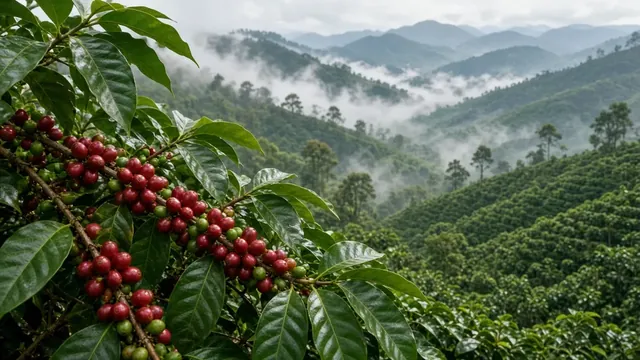
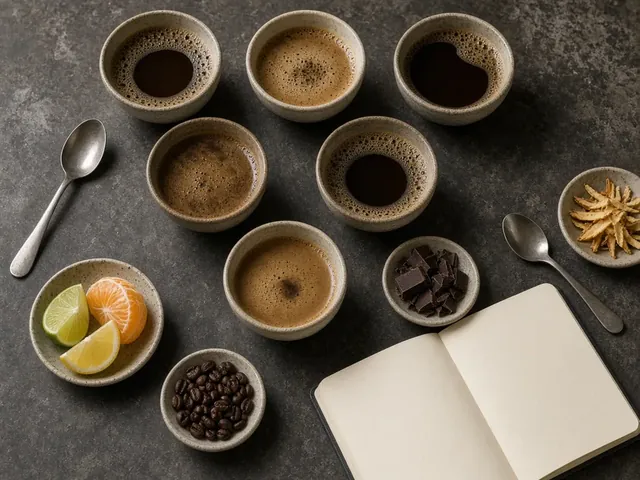
Ethiopia is where Coffea arabica evolved, in the forests of the southwest. Because coffee has grown here for so long, the country has enormous genetic diversity. Many lots are simply labelled "heirloom" or "landrace", meaning a mix of local varieties rather than one named cultivar. Washed Ethiopian coffees are famous for floral, tea-like delicacy (jasmine, bergamot, lemon). Naturals, dried in the whole cherry, are fruitier and heavier, with blueberry and strawberry notes.
Key regions
- Sidama: a large southern region with bright, citrusy washed coffees and fruit-forward naturals.
- Yirgacheffe (Gedeo zone): perhaps the best-known name in specialty coffee, prized for floral washed lots.
- Guji: high-altitude coffees, often intensely fruity naturals.
- Limu, Jimma and Kaffa (west): forest and semi-forest coffees, often rounder and more spiced.
- Harrar (east): historically known for dry-processed, wild, winey coffees.
Processing
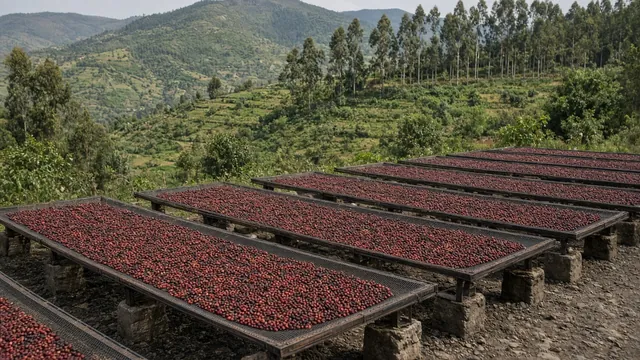
Most smallholder farmers sell cherries to a local washing station, which processes coffee from hundreds of growers. Washed lots are de-pulped, fermented and washed before drying. Naturals are dried in the whole cherry on raised beds like those pictured above. See our processing guide.
How to brew Ethiopian coffee
Light roasts and paper filters show Ethiopian coffee at its best. Try our pour-over recipe at 1:16 with water around 95 °C, or an iced pour-over for a summer cup.
Coffees to try

Origins Sampler (3 × 4 oz)
three countries · three processes · one box
Frequently asked questions
Why is Ethiopian coffee so floral?
A combination of high altitude, slow ripening, unique heirloom genetics and careful washed processing preserves delicate aromatics.
What does 'heirloom' mean?
It refers to Ethiopia's many indigenous landrace varieties, often mixed in one lot.
Is Ethiopian coffee good for espresso?
Yes, as a bright, fruity espresso, though many people prefer it as filter coffee.