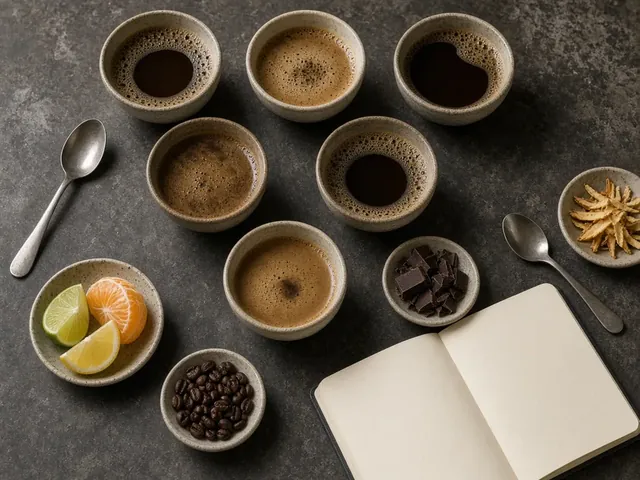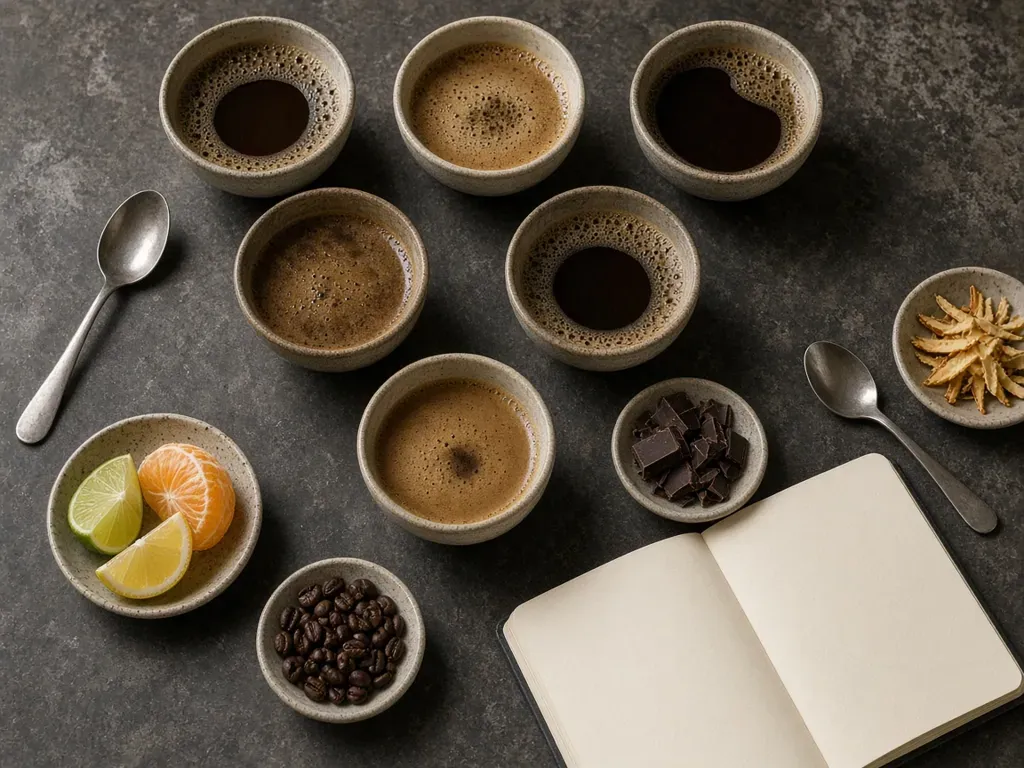
The five things to notice
- Aroma: smell the dry grounds, then the brewed coffee. Floral? Nutty? Fruity?
- Acidity: a bright, mouth-watering sensation, like biting an apple. Pleasant acidity is "lively"; harsh acidity is "sour".
- Sweetness: caramel, honey or fruit sugars, often most noticeable as coffee cools.
- Body: the weight and texture in your mouth, from tea-like to creamy or syrupy.
- Finish: what lingers after you swallow. Clean and sweet is good; dry and bitter suggests over-extraction.
How cupping works
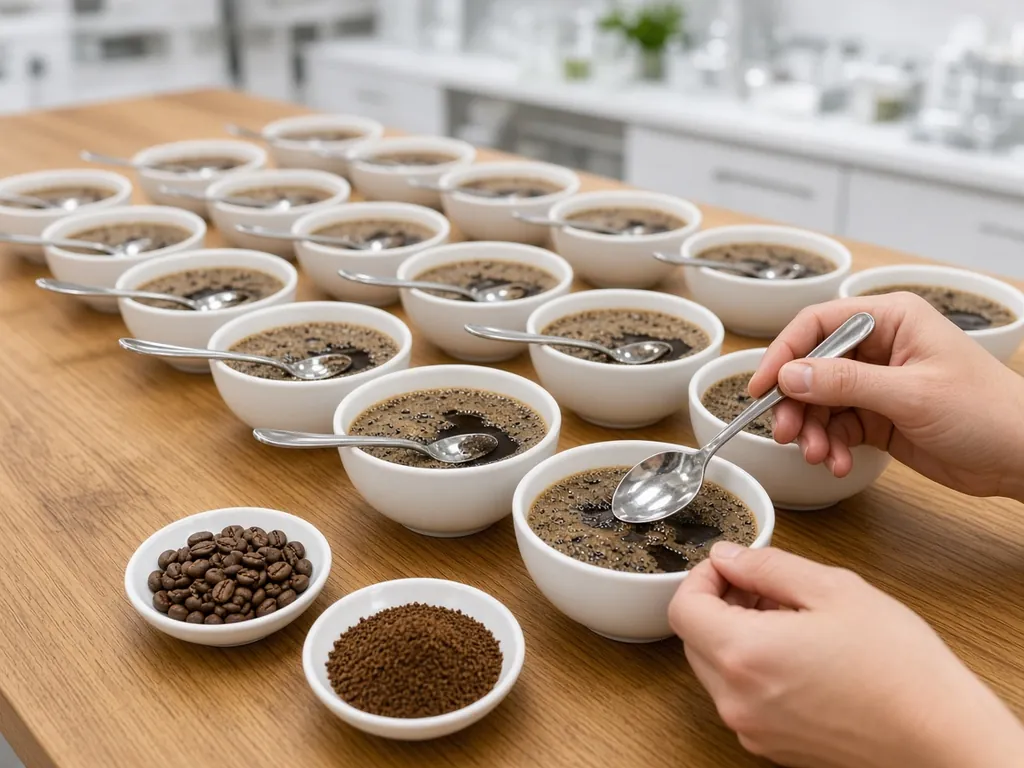
Professionals assess coffee by cupping: coarsely ground coffee is steeped in bowls with hot water for about four minutes, the floating crust is "broken" with a spoon to release aroma, the surface is skimmed, and tasters slurp from spoons to spray coffee across the palate. The Specialty Coffee Association publishes the protocols used worldwide.
Build your palate at home
- Taste side by side: two coffees at once make differences obvious. Our Origins Sampler is built for this.
- Taste as it cools: flavours change between hot, warm and room temperature.
- Use a flavour wheel: move from broad (fruity) to specific (berry, then blackcurrant).
- Taste real things: eat an apple, smell jasmine tea, and chew dark chocolate, then compare.