Why processing matters
A coffee "bean" is the seed of a cherry. Between the skin and the seed lies sweet fruit pulp and a sticky layer called mucilage. Processing removes these layers and dries the seed to around 10–12% moisture so it can be stored and shipped. How much fruit stays in contact with the seed, and for how long, changes sweetness, acidity, body and fruitiness.
Washed (wet) process
Cherries are de-pulped, then the mucilage is broken down by fermentation in tanks (typically 12–72 hours) and washed off before drying. Washed coffees are clean, bright and transparent, letting variety and terroir shine. Examples include most Colombian, Kenyan and Guatemalan coffees and many Ethiopian lots.
Natural (dry) process
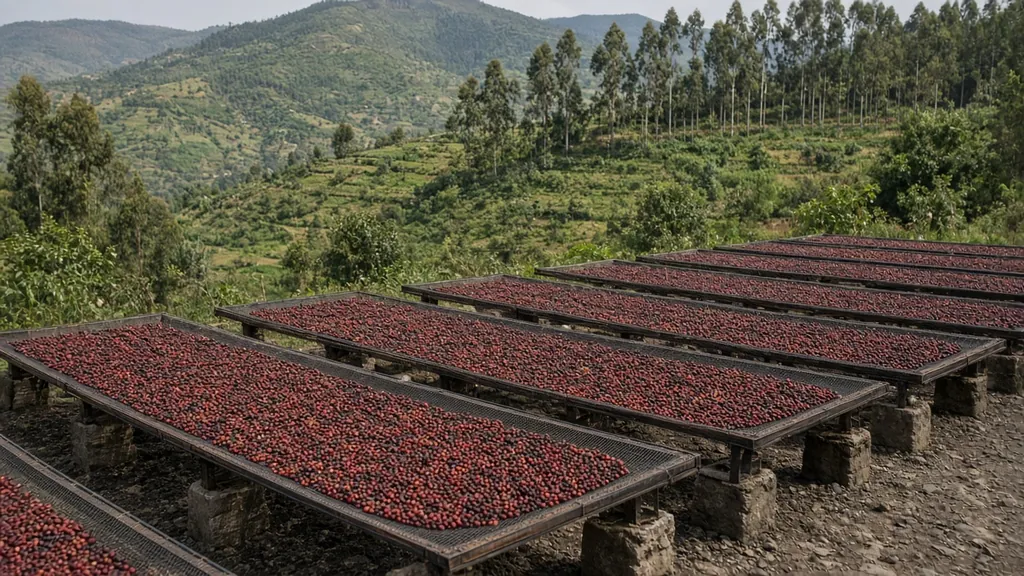
Whole cherries are dried in the sun on patios or raised beds for 2–6 weeks before the dried fruit is hulled off. Naturals are fruity, sweet and heavy-bodied, sometimes winey or boozy. Brazil and Ethiopia are known for them. Careful turning is essential to avoid mould and over-fermentation.
Honey and pulped natural
The skin is removed but some or all of the mucilage is left on while drying. Producers in Costa Rica name these "yellow", "red" or "black" honey depending on how much mucilage remains and how slowly it dries. Brazil's "pulped natural" is similar. Expect syrupy sweetness between washed clarity and natural fruit.
Experimental fermentations
Anaerobic (oxygen-free) fermentation, carbonic maceration and added yeast cultures are increasingly common in specialty coffee. They can produce intense, distinctive flavours (tropical fruit, cinnamon, wine) and divide opinion. Look for clear labelling.
At a glance
| Process | Body | Acidity | Flavour |
|---|---|---|---|
| Washed | Light–medium | Bright, clear | Clean, floral, citrus |
| Honey | Medium | Moderate | Syrupy, sweet, stone fruit |
| Natural | Heavy | Softer | Berries, tropical, winey |
| Anaerobic | Varies | Varies | Intense, sometimes boozy |
Frequently asked questions
Which process is best?
None is "best"; it's taste preference. Washed for clarity, natural for fruit, honey for sweetness.
Why is it called honey process?
The sticky mucilage feels like honey; no honey is used.