Ratio1:16
Coffee20 g
Water320 g at 93–96 °C
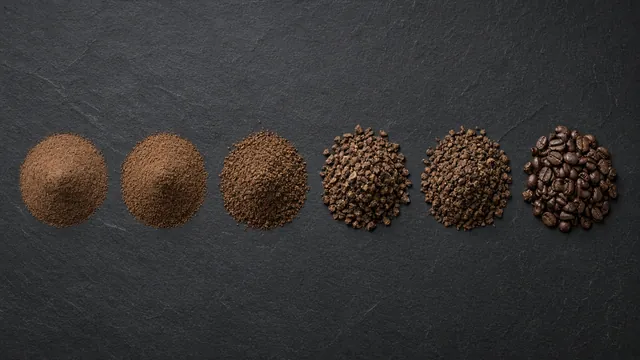
GrindMedium-fine (table salt)
Total time3:00–3:30
Pour-over ("hand brew" or "filter") means pouring hot water over a bed of ground coffee in a cone and letting gravity draw it through a paper filter. The paper catches oils and fine particles, so the cup is clean and bright. That is why it suits fruity and floral single origins like our Ethiopia and Kenya.
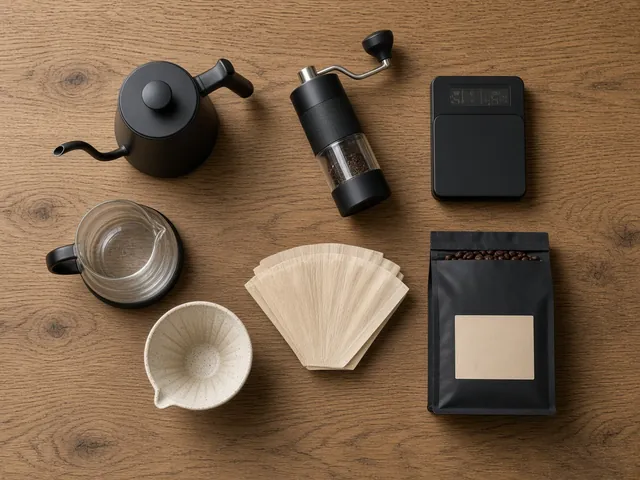
What you need
- A cone dripper (ceramic, glass or plastic) and matching paper filter
- A burr grinder
- A scale with a timer (0.1 g resolution helps)
- A kettle, ideally a gooseneck for control
- A mug or server
Step-by-step recipe
- Heat the water. Bring water to a boil and let it rest 30 seconds, or set a variable kettle to 94 °C (201 °F). Lighter roasts like hotter water; darker roasts prefer 90–92 °C.
- Rinse the filter. Place the filter in the cone over your mug and rinse it with hot water to remove papery taste and pre-heat everything. Discard the rinse water.
- Grind 20 g of coffee to medium-fine, similar to table salt. Add it to the filter, shake level, and zero the scale.
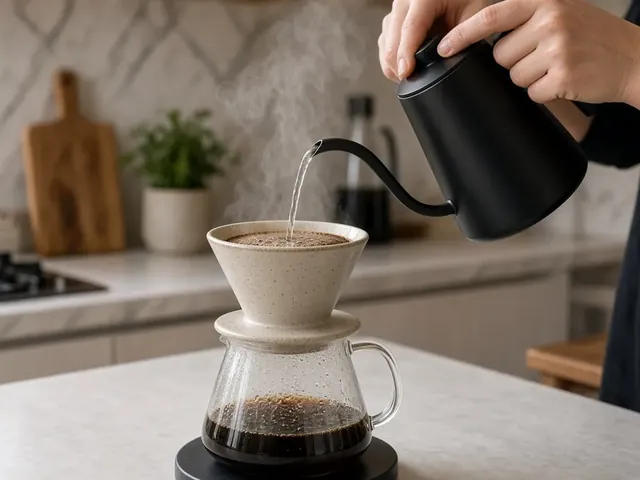
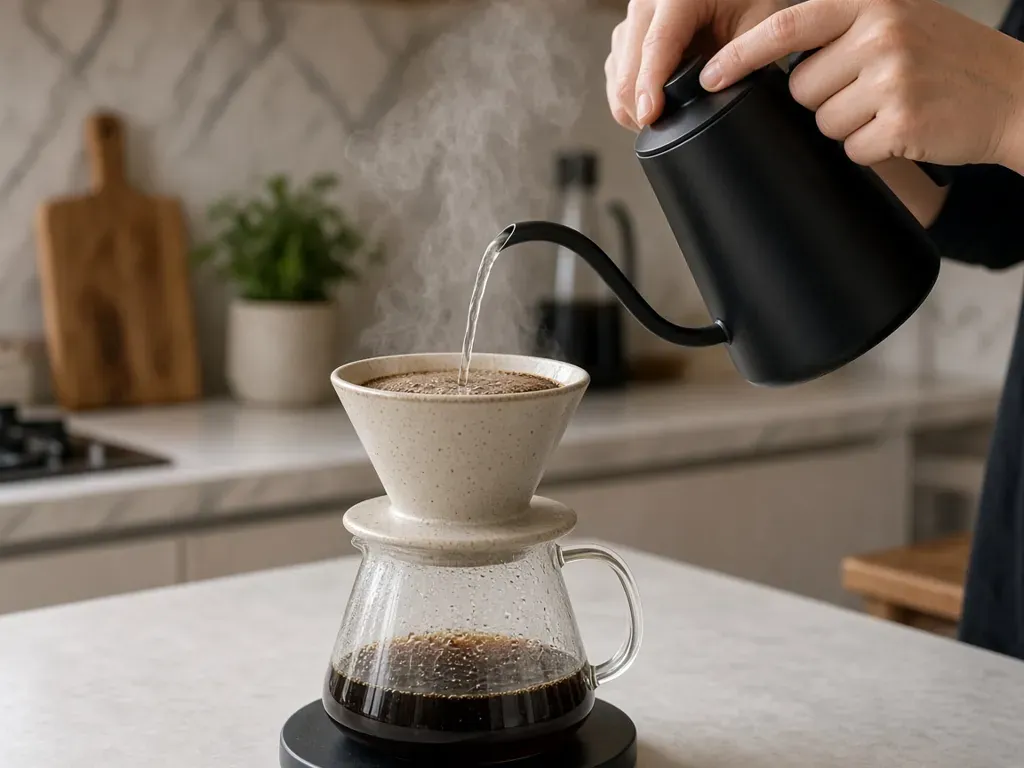
- Bloom (0:00–0:40). Start the timer and pour about 50 g of water, enough to wet all the grounds. Swirl gently. Fresh coffee will puff up as CO2 escapes.
- Main pour (0:40–1:45). Pour slowly in small circles from the centre outward, avoiding the paper, until the scale reads 320 g. Pour in two or three stages if you prefer.
- Drawdown (to about 3:00–3:30). Give the cone a gentle swirl to flatten the bed and let it drain. Remove the cone, swirl the coffee and enjoy.
Tips for a better cup
- Grind just before brewing. Ground coffee loses aroma within minutes.
- Adjust only one variable at a time, usually grind.
- Total time is your guide: much faster than 2:45 usually means too coarse; much slower than 4:00 means too fine.
- Filtered water makes a real difference. See our water guide.
- Let the cup cool a little; flavours open up between 60 and 50 °C.
Troubleshooting
| If your coffee tastes… | Try this |
|---|---|
| Sour, sharp, thin | Grind finer, use hotter water, or pour more slowly to extend the brew. |
| Bitter, dry, harsh | Grind coarser, use slightly cooler water, or reduce agitation. |
| Weak but not sour | Use more coffee (try 1:15). |
| Muddy or slow drain | Grind coarser and pour more gently; check your grinder for excess fines. |
Coffees we'd pick
Frequently asked questions
What is the best ratio for pour-over?
Start at 1:16 (20 g coffee to 320 g water). Go to 1:15 for more body or 1:17 for a lighter cup.
Do I need a gooseneck kettle?
It helps you pour slowly and precisely, but you can brew good pour-over with any kettle if you pour gently.
Why bloom coffee?
Fresh coffee releases CO2. Blooming lets that gas escape so water can extract evenly.