Why grind size matters
Grinding increases the surface area water can reach. Finer grounds extract faster and slow the flow of water; coarser grounds extract more slowly and let water pass quickly. Every brew method has a contact time, and grind size has to match it. Too fine and coffee over-extracts (bitter, dry). Too coarse and it under-extracts (sour, thin).
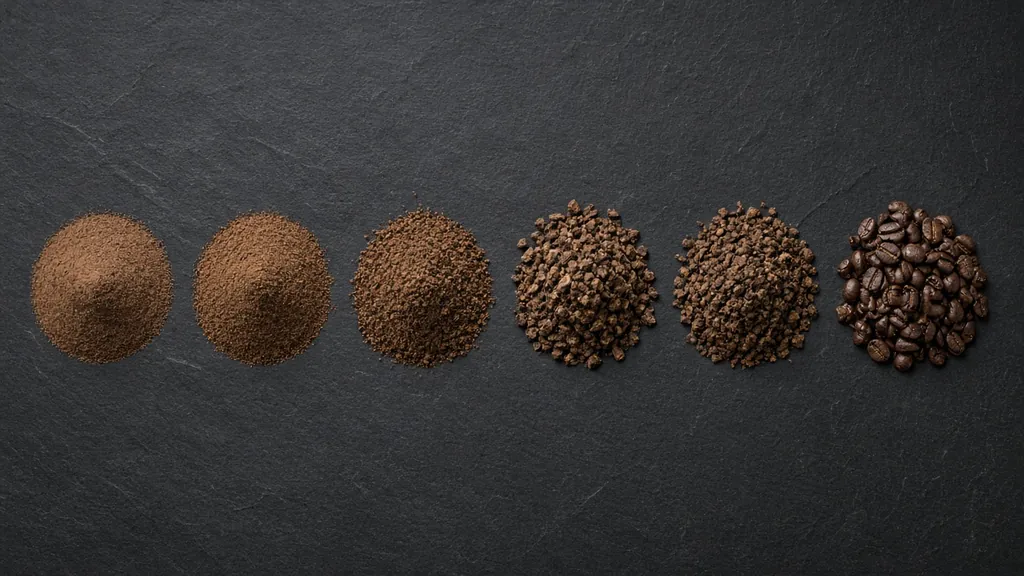
Grind size chart
| Grind | Looks like | Use for | Contact time |
|---|---|---|---|
| Extra-fine | Flour, powder | Turkish coffee | Boiled |
| Fine | Fine sand / powdered sugar | Espresso | 25–32 s |
| Fine-medium | Table salt, a bit finer | Moka pot, AeroPress | 1–4 min |
| Medium-fine | Table salt | Pour-over cones | 2:30–3:30 |
| Medium | Sand | Drip machines, flat-bottom drippers | 4–6 min |
| Coarse | Sea salt | French press | 4 min+ |
| Extra-coarse | Peppercorns | Cold brew | 12–18 h |
Burr vs blade grinders
Blade grinders chop coffee randomly, producing dust and boulders in the same batch. That makes extraction uneven, bitter and sour at once. Burr grinders crush beans between two surfaces set a fixed distance apart, giving a much more even grind. A good hand burr grinder is often the best-value upgrade in home coffee. See our gear guide.
How to dial in
- Brew using a standard recipe.
- Taste: sour/thin means grind finer; bitter/dry means grind coarser.
- Change grind in small steps and change only one variable at a time.
- Use brew time as a guide.
Frequently asked questions
What grind is drip coffee?
Medium, like sand.
What grind is French press?
Coarse, like sea salt.
Does grind size affect caffeine?
Finer grinds can extract slightly more caffeine in the same time, but ratio and brew time matter more.