What roasting does
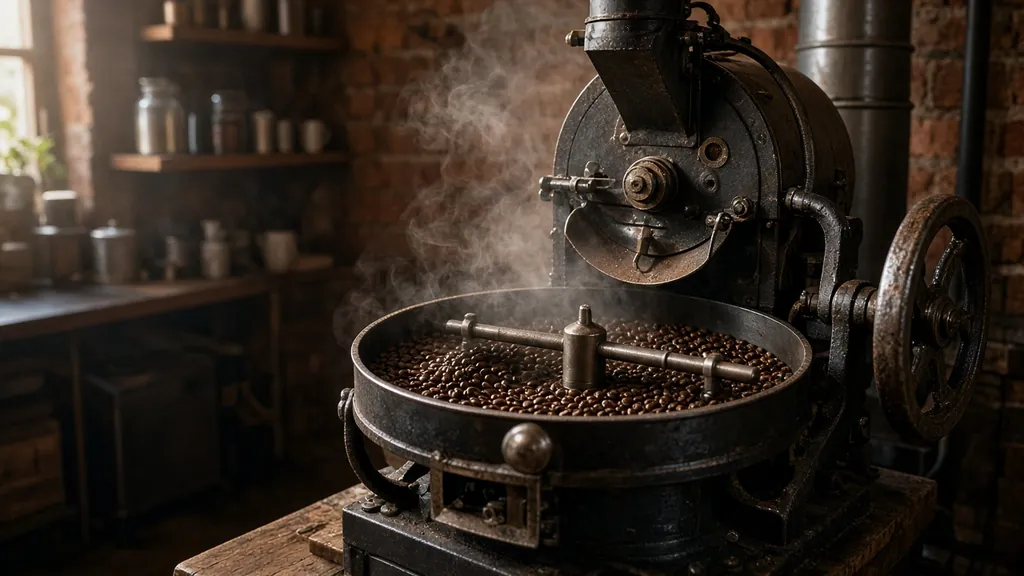
Green coffee tastes grassy and cereal-like. During roasting (typically 9–15 minutes in a drum roaster) moisture evaporates, sugars caramelise and hundreds of aromatic compounds form through the Maillard reaction and caramelisation. Around 196–205 °C the beans "first crack", an audible pop as steam and gas escape. Light roasts finish shortly after first crack. Darker roasts continue toward and into "second crack", when oils migrate to the surface.
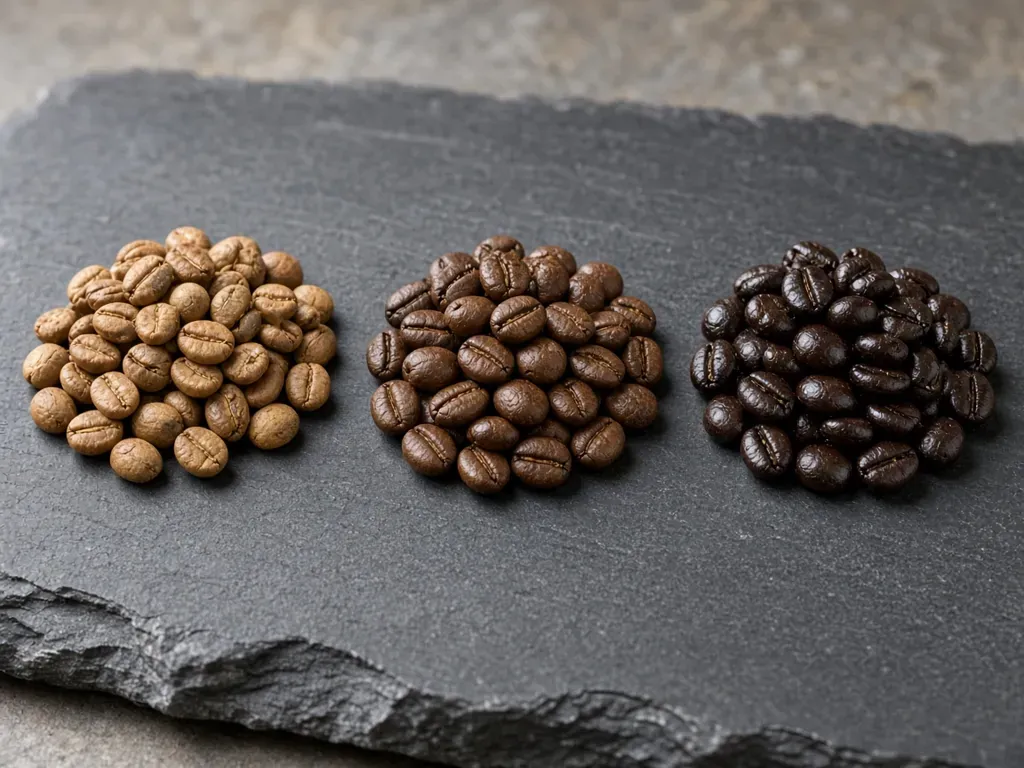
Our 1–10 roast scale
| Level | Name | What you'll taste | Our coffees |
|---|---|---|---|
| 1–3 | Light | Fruit, florals, tea-like, bright acidity | Ethiopia, Kenya |
| 4–5 | Medium-light to medium | Caramel, apple, chocolate, balanced | Colombia, Daybreak, Guatemala |
| 6–7 | Medium to medium-dark | Chocolate fudge, brown sugar, fuller body | Lantern, Cold Brew |
| 8–10 | Dark | Cocoa, molasses, smoke, low acidity | Fireside |
Light vs medium vs dark
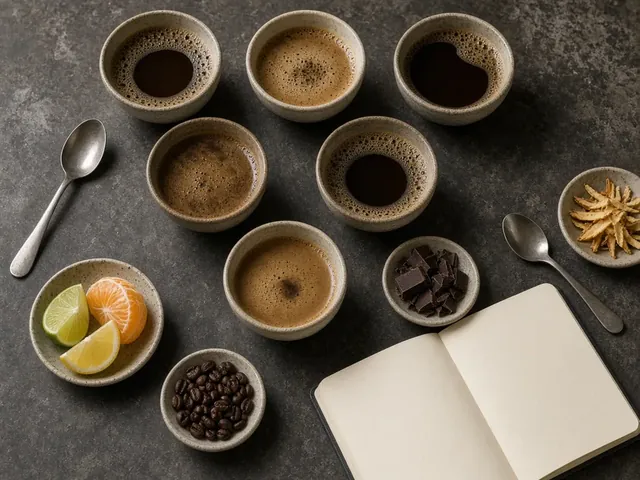
Light roasts preserve the coffee's origin character, its "terroir", and taste brighter and more delicate. They're denser and need hotter water and a finer grind to extract well. Medium roasts balance origin sweetness with roast-derived caramel and chocolate, which is why they're the most popular. Dark roasts taste more of the roast itself: bittersweet cocoa, smoke and a heavier body, with less acidity. Taken too far they turn ashy.
Does roast level affect caffeine?
Only slightly. Caffeine is fairly stable during roasting. Because dark roasts lose more mass, a scoop of dark roast can contain a little less caffeine than a scoop of light, while by weight they are very similar. Brew method and amount of coffee matter far more. See our caffeine guide.
Choosing a roast
- Milk drinks, drip and French press: medium to medium-dark.
- Black pour-over or iced pour-over: light to medium-light.
- Low-acid preference: medium-dark to dark, or a Brazilian coffee.
Frequently asked questions
Is dark roast stronger?
It tastes bolder, but caffeine by weight is similar. "Strength" in brewing means how much coffee is dissolved, which depends on your ratio.
Which roast is least acidic?
Dark roasts taste least acidic.
Why are some beans oily?
Dark roasts push oils to the surface. Light roasts look dry.