The four enemies of fresh coffee
Oxygen, light, heat and moisture. Once roasted, coffee gradually releases CO2 and loses volatile aromatics, while oils oxidise and turn stale. Ground coffee loses aroma far faster than whole beans because so much more surface is exposed.
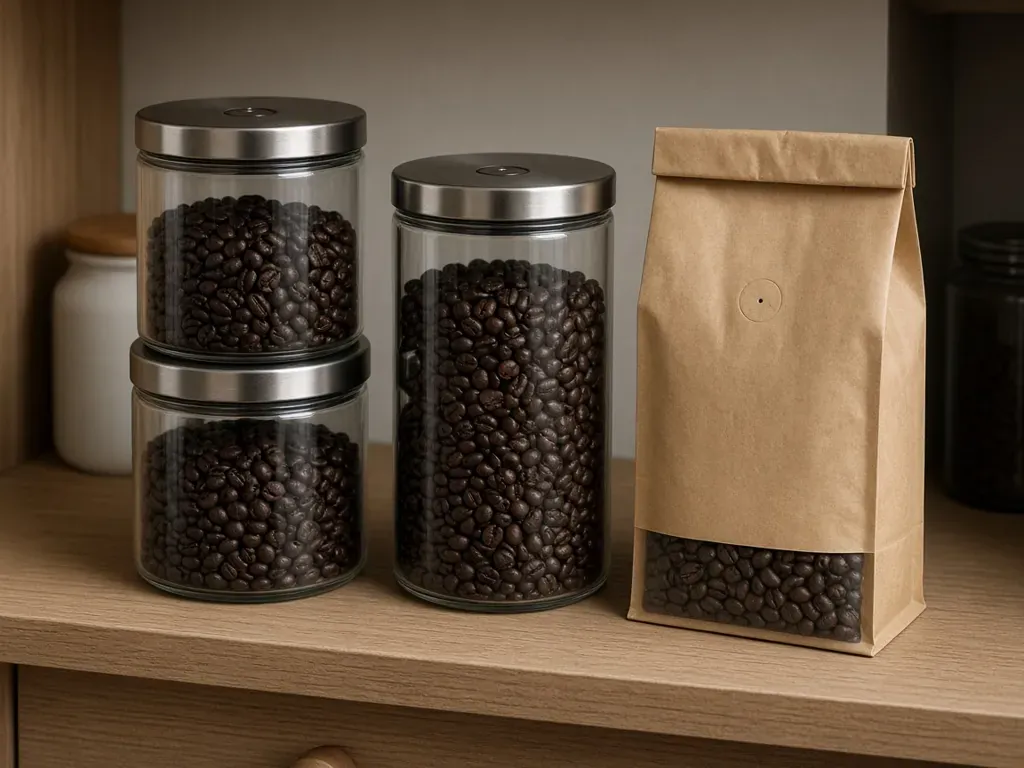
How to store coffee
- Keep beans in the original valve bag (squeeze out air and seal) or an opaque airtight canister.
- Store in a cool, dark cupboard, away from the oven, kettle and sunny windows.
- Buy amounts you'll use in 2–4 weeks, or subscribe so coffee arrives as you need it.
- Grind just before brewing.
Should you freeze coffee?
Freezing can preserve coffee for months if you do it properly: divide beans into airtight portions, freeze once, and take out only what you'll use in a week. Let portions come to room temperature before opening to avoid condensation. Many specialty roasters and baristas freeze rare coffees this way. Don't keep opened bags in the fridge, where coffee absorbs moisture and odours.
Freshness timeline (typical)
| Days after roast | What's happening |
|---|---|
| 0–3 | Very gassy; can taste sharp. Fine for filter after a day or two. |
| 4–21 | Peak window for most filter coffee. |
| 7–30 | Peak window for most espresso. |
| 30–60 | Gradually flatter, but still very drinkable if sealed. |
| 60+ | Noticeably stale, papery or flat; best for cold brew. |
Frequently asked questions
How long do coffee beans last?
Sealed whole beans taste best within about a month of roasting and remain drinkable for a couple of months. Ground coffee fades within days.
What is the valve on coffee bags?
A one-way valve lets CO2 out without letting oxygen in.